Traci Lords Net Worth 2026: How a Career Built on Controversy Became a Four-Decade Business
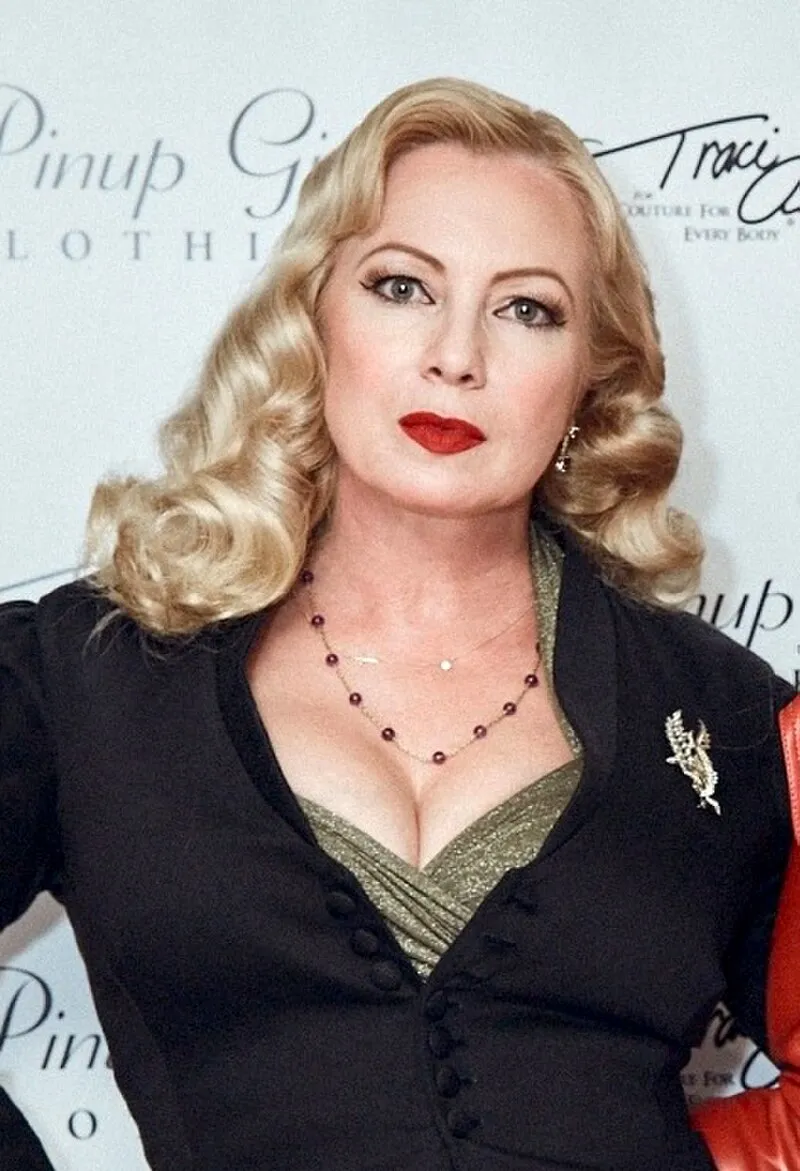
Photo of Traci Lords, via Wikimedia Commons
Most net worth profiles in this industry describe an arc of accumulation: rising rates, expanding platforms, eventual diversification. Traci Lords offers something structurally different. Her adult film career lasted roughly two years in the mid-1980s and ended in a legal firestorm that reshaped the industry's compliance regime. Everything since — and there has been a great deal since — has been an exercise in converting notoriety into a mainstream entertainment career with genuine longevity.
By most reasonable estimates, Lords' net worth in 2026 sits somewhere between $6 million and $8 million. The figure is not driven by any single windfall but by nearly four decades of steady, diversified work across film, television, music, publishing, and the personal-appearance circuit.
The Two Years That Defined the Story
Lords entered adult films in 1984 and quickly became one of the era's most prominent performers. In 1986, it emerged that she had been underage for much of that work, a disclosure that triggered criminal investigations, civil litigation, and an industry-wide reckoning over age verification that still shapes how the business operates today.
Financially, the immediate effect was catastrophic for the studios and complicated for Lords herself: existing product had to be pulled from distribution, contracts collapsed, and the income that had supported her vanished almost overnight. The legal aftermath produced a durable industry standard — mandatory documentation of age — and it left Lords with a public profile that was, paradoxically, far larger than her film work alone would have created.
That is the central financial fact of her career: her name became a cultural reference point, and reference points have commercial value.
The Mainstream Rebuild
The conventional path for performers leaving adult entertainment in that era was obscurity. Lords took a different route, enrolling in acting training and pursuing mainstream roles with unusual discipline. Her early credits in the late 1980s and early 1990s established her as a working character actress rather than a novelty booking, and she subsequently built a steady television résumé through the 1990s and 2000s, including genre series and guest arcs that kept her in consistent professional circulation.
Mainstream acting income is rarely spectacular for character performers, but it is cumulative and it carries residual value. Union-scale television work, syndication payments, and the credibility that comes with a legitimate screen résumé all contributed to a far more stable financial base than adult film earnings ever could have.
Music and the 1990s Diversification
Lords' 1995 album, a dance and electronic record released on a major label, was a genuine commercial venture rather than a vanity project. The lead single received club and radio play, and the album charted. Music income in that era came from record sales, publishing royalties, licensing, and remix commissions — and publishing rights, in particular, can generate income for decades.
Her music work has also supported touring and DJ appearances, a category that overlaps heavily with the personal-appearance economy that became central to her finances later.
Publishing as an Asset
Lords' 2003 memoir was a significant financial and reputational event. Memoir advances are typically modest unless the subject is a major celebrity, but the book's commercial performance, serialization rights, audiobook licensing, and international editions created a royalty stream that has continued well past the initial publication window. More importantly, the book established her as an authorial voice, which expanded the range of paid engagements available to her.
For performers with difficult or unusual histories, a well-received book is often the single most effective conversion of reputation into durable income. It is also one of the few assets in this business that appreciates over time.
The Appearance Circuit
The convention and personal-appearance economy deserves more attention than it usually receives in net worth analysis. For a figure of Lords' historical significance, signing events, fan conventions, and speaking engagements produce reliable per-event fees with low overhead. Over a full calendar year, a well-managed appearance schedule can generate income comparable to a mid-level acting career — and unlike acting, it is controllable.
This is especially true for figures whose cultural footprint exceeds their current output. Lords remains a documentary subject, podcast guest, and interview booking of persistent interest, and that interest has a market price.
Licensing and Image Rights
Ownership and control of one's name, likeness, and life story rights is a meaningful asset class. Licensing arrangements for documentaries, retrospectives, and archival projects generate fees that are small individually but recurring. For someone whose career is a subject of ongoing cultural and legal discussion, image rights are an appreciating rather than depreciating holding.
Real Estate and Long-Term Planning
Lords' income profile — irregular but extending across four decades — has been managed with a conservative orientation. Real estate holdings, concentrated in California, form a substantial portion of her estimated net worth, alongside conventional investments and residuals. Property serves as the anchor in a portfolio where earnings have never been purely predictable.
The 2026 Outlook
Heading into 2026, Lords' finances are best characterized as mature. New acting work is selective, publishing and licensing income continues at a modest but reliable level, and the appearance circuit remains the most active revenue stream. There is no plausible scenario in which her net worth changes dramatically in either direction — which is, in this industry, an unusual achievement.
The Bottom Line
An estimated $6 million to $8 million net worth for Traci Lords in 2026 understates the more interesting point: hers is the clearest case study in the business of converting a short, controversial career into a long, legitimate one. The legal history made her famous; the four decades of disciplined work made her solvent.
Estimates in this profile are based on public reporting, industry rate structures, and comparable career benchmarks. Figures are approximate and not verified by the subject.