Jenna Jameson Net Worth 2026: How the Industry's First True Brand Builder Structured Her Wealth
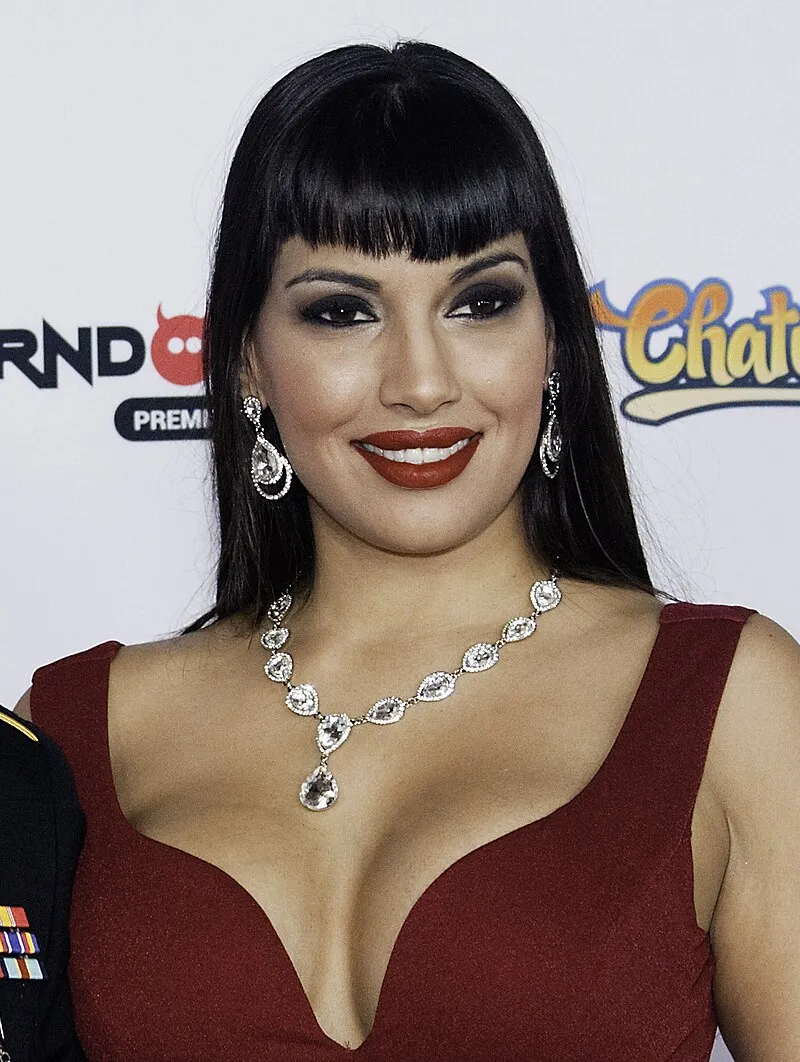
Photo of Jenna Jameson, via Wikimedia Commons
The Original Crossover Case Study
Long before subscription platforms and direct-to-consumer brands rewrote the economics of adult entertainment, Jenna Jameson proved that a performer could own the business around the performance. Her career arc — from Las Vegas dancer to top-billed star to chief executive of her own production label — became the reference model for everyone who followed. Estimating her 2026 net worth requires looking at both halves of that arc and at the liabilities that came with it.
Most published estimates place her current net worth in the $8 million to $12 million range. PornStar Net Worth regards that as a plausible but unverified band. Jameson has never released financial statements, and the widely quoted numbers trace back to entertainment-media speculation rather than disclosure.
Timeline: From Stage Name to Corporate Name
Jameson entered the industry in the early 1990s and rose quickly, aided by exclusive contracts that were unusual at the time. By the late 1990s she was the highest-profile name in the business. The pivotal move came in 2000, when she co-founded Club Jenna with her then-husband. The company produced films and licensed her name across a range of products, converting a performer's identity into a durable trademark.
Her 2004 memoir, co-written with Neil Strauss, became a New York Times bestseller — a genuine mainstream crossover that few in the industry had achieved. In 2006, Playboy Enterprises acquired Club Jenna in a transaction widely reported at the time; the deal gave Jameson both capital and a corporate platform. She continued to appear under exclusive arrangements into the late 2000s before stepping back from performing.
Earnings Breakdown
Film Work and Contract Income
At her peak, Jameson commanded contract terms rather than per-scene rates, an arrangement that front-loaded guaranteed income and reduced her exposure to volume-based pay. Exact figures were never public, but contemporaneous reporting consistently described her as the industry's highest-paid performer of her era.
Club Jenna and Equity Value
This is the defining line item. Unlike performers paid a flat fee, Jameson held ownership in the entity that marketed her. When that entity was sold, she converted years of brand equity into a lump sum. Any serious estimate of her wealth has to weight this transaction more heavily than all her film earnings combined.
Publishing and Mainstream Media
Her memoir generated advances, royalties, and a wave of television appearances. She followed it with a second book and a string of reality-television and interview-format bookings. Publishing is rarely transformative on its own, but it functions as a multiplier: it raised her licensing value and made her legible to advertisers who would not otherwise engage with the category.
Endorsements and Licensing
Name licensing — apparel, novelty products, and appearances — produced recurring income during the years when her recognition was at its height. These arrangements typically carry royalty rates in the mid-single digits, which means meaningful money only at volume. During the mid-2000s, the volume was there.
Real Estate and Personal Assets
Jameson's property history has been reported in pieces over the years, including residences in California and later in Nevada. Real estate appears to have been a store of value rather than a speculative vehicle. Public records show transactions, not holdings, and readers should treat any precise 2026 valuation with caution.
The Cost Side of the Ledger
A balanced profile cannot ignore expenses and setbacks. Jameson filed for bankruptcy in 2004, a filing that surprised observers given her visibility and which she attributed to mismanagement and legal costs. The episode is instructive: high gross income and accumulated wealth are different things, and the gap between them is usually occupied by advisors, litigation, and lifestyle overhead. Later in life she faced significant health challenges, including a diagnosis of Guillain-Barré syndrome in 2018, which curtailed earning activity and shifted her public presence toward wellness advocacy.
Recent Projects and the 2026 Picture
In recent years Jameson has engaged with subscription platforms and direct-to-audience content on a smaller, more controlled scale, alongside wellness-focused partnerships and periodic media appearances. She is not running a large enterprise in 2026; she is managing a legacy brand. That distinction matters. Legacy brands generate modest, stable income — appearance fees, licensing renewals, social sponsorships — but they do not compound the way an operating company does.
Assessing the Numbers
A $8 million to $12 million estimate is defensible for 2026. The lower end assumes a conservative read of residual licensing and asset value; the upper end assumes favorable real estate appreciation and continuing brand deals. Neither figure should be mistaken for a disclosed account.
Why the Template Still Matters
Every performer who now negotiates equity in a production company, launches a skincare line, or builds a subscription audience is working from a playbook Jameson helped write. Her financial record is mixed — enormous peak earnings, a bankruptcy, a corporate exit, a long tail of licensing — and that mixture is precisely what makes it worth studying. She demonstrated that the name is the asset, and that whoever controls the name controls the money.